Sometimes you have to find ways to meet leaders where they are. That idea sits at the core of today's guidance.
As I've mentioned before, delegation is one of the biggest gaps between knowledge and behavior for many leaders. Everyone knows they should be doing more of it but few take action on that knowledge.
It turns out, simply telling people they should do more or less of something does little to combat whatever internal resistance they may have for that activity. This phased approach to delegation meets the leader where they are. If a leader has a low level of trust or comfort delegating, either in general or to a specific individual, it offers a way to strengthen that comfort level.
As a result, this model develops both the person being delegated to and the leader who is doing the delegating.
Everyone has a different comfort level with delegating. I often joke that I'm an over-delegator. I tend to have a higher risk tolerance with delegation and am therefore comfortable delegating most tasks with very little oversight. If that's you, you may not need a phased approach. Like me, you may jump directly to the last phase more often than not.
If you're less comfortable, you may start elsewhere in the ladder. There are no rules to say you have to start at a certain phase. In fact, you may start at different phases with different employees, depending on the level of trust you have with that individual.
It's also ok to go backwards on this scale if trust has broken or something went really poorly. It's much better to scale back delegation than to abandon in it altogether which is what many leaders do when it doesn’t go well.
The end goal is to reach the "own" phase for anything you delegate but how you get there may look different from one instance to the next.
Regardless of the phase, focus on being clear with expectations by giving the what and why, but not the how.
With all that said, here is what the phases look like…
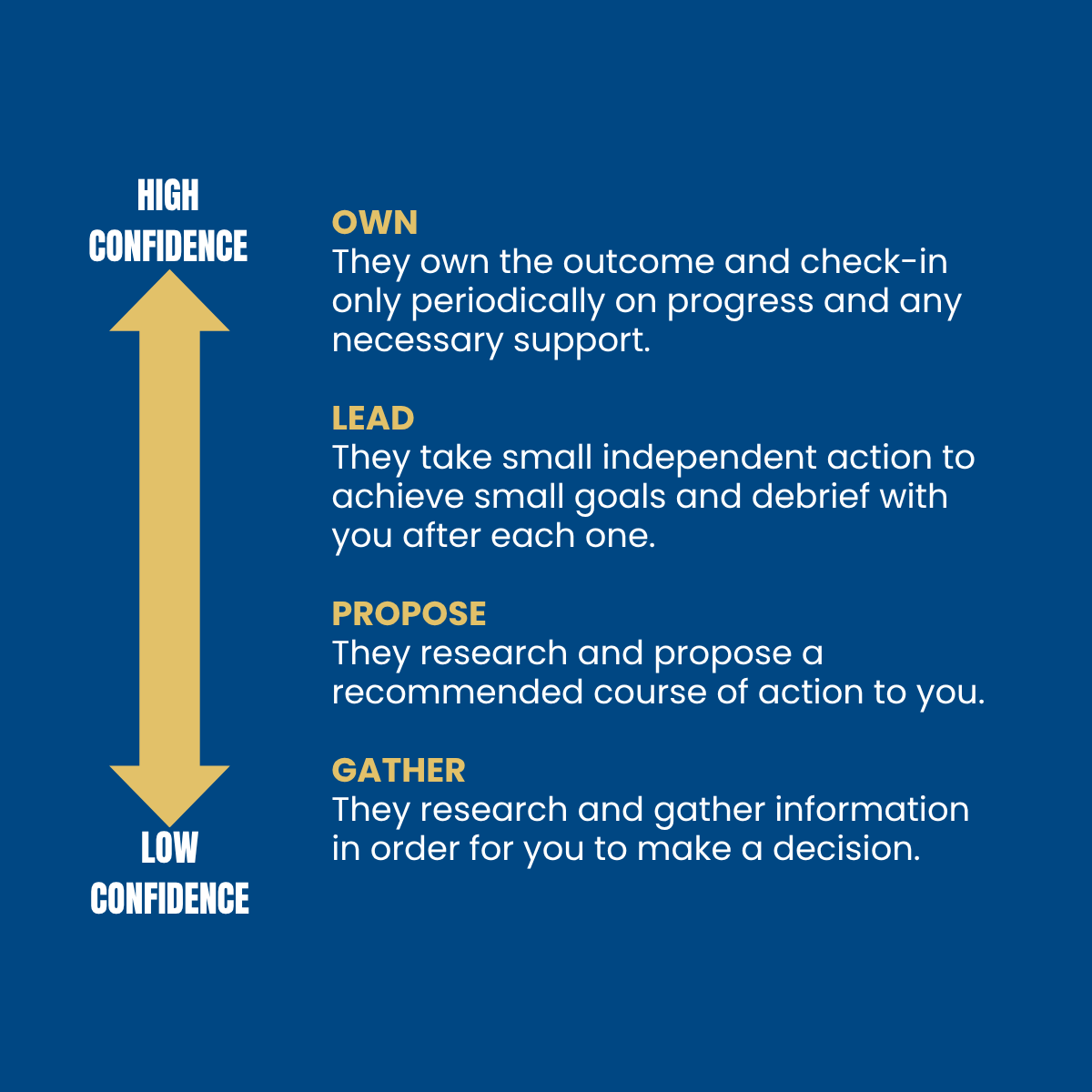
Gather
In the first phase, you are having the person gather information for you. They are solely researching options and gathering data in order for you to make a decision. This will give you an idea of how they go about collecting information and leveraging resources.
The risk is low at this phase. Let's say they do a poor job of information gathering. You can coach them at that point and have them try again. Resist the urge to do it yourself if their first pass is insufficient. The phased ladder is stretching your development just as it is theirs.
Propose
At this phase, they do the same research but now also propose a recommended course of action to you. Now you are getting a glimpse into their decision making abilities without taking a risk since the decision is still yours to make.
Unless their recommendation carries serious risk, I recommend letting them pursue their chosen option. The trust and engagement you build from supporting their recommendation is likely to outweigh any negative consequences of their solution.
Lead
Once you are comfortable with their decision making, have them take independent action to achieve small goals. In this phase, the two of you debrief after action is taken and the goal is either met or not met.
This is the first phase where you are giving them a chance to fail in the real world. Depending on your comfort level, you can start with small goals and frequent check-ins and build from there.
If things go wrong here, have them fix the issue rather than swooping in to save the day. A lot of learning and development happens through our mistakes, not just our successes.
Own
In the final phase, they own the outcome and check-in only periodically on progress and any necessary support. They are essentially operating autonomously at this point and are just keeping you updated.
This Week's Action Items:
Identify a task you'd like to delegate.
Decide who you will give it to.
Identify where on this ladder you are comfortable starting based on your level of trust with that individual.
Work through the steps as necessary until they have reached the "own" phase.